What Are the Most Common Signs Your Dishwasher Needs Repair 768x432 1

AC Blowing Warm Air? 7 Checks to Try Before You Call

You walk in thinking it’ll be cool, but the whole house is like an oven, with warm air blowing from the vents. Irritation peaks. While it is incredibly easy to imagine a fried compressor and a massive repair bill, hold on. The actual culprit might be laughably minor. Before paying an expert, scanning a few quick items is totally worth your time (and keeps your wallet safe).

 Check Your Thermostat Settings First

A rogue finger can ruin everything. Your very first action should involve checking the wall unit. A busy child may accidentally press buttons, completely disrupting the setup. You can confirm your device is performing its true intended function by knocking out these three incredibly basic, fast steps:

  • Find the central system control switch and verify it remains locked into the cooling mode instead of the heating mode.
  • View the desired temperature digit on the main screen, ensuring without doubt it sits lower than the room temperature.
  • Check the internal fan option and switch it directly from the “On” selection to the “Auto” selection.

Whenever that fan stays left on “On,” the main indoor blower motor runs endlessly, pushing warm room-temperature breezes everywhere. You really must always pick the “Auto” setting. This guarantees the machine only ever pushes air when those crisp, chilly winds are completely generated, perfectly cooled and ready to flow right now.

 Inspect Your Dirty Air Filter

We love our dogs and cats, but they shed a lot of hair inside the house. Your air conditioner needs to pull in warm air from your rooms to cool it down. The indoor air filter traps that pet hair and dust so those messy things do not get inside the delicate machinery. Over time, the air filter gets covered in a thick layer of dirt. When the filter is completely blocked, the air cannot flow through the system properly. This lack of smooth airflow can cause your system to start blowing warm air. You should pull the filter out of its slot and hold it up to a bright light bulb. If you cannot see light shining through the material, you must slide a brand new filter in.

 Inspect the Outdoor Condenser Unit

Your air conditioning system has a large metal box sitting in your yard. This outdoor machine is called the condenser and its main job is to release the heat that was taken out of your house. The condenser needs plenty of empty space around it to push the hot air away into the open sky. Sometimes tall grass, garden weeds and fallen tree leaves grow too close to the metal box. When natural debris blocks the metal sides, the heat gets trapped inside the machine. This makes the whole cooling system work too hard and blow warm air.

  • Pull away any thick vines growing on the metal grates.
  • Rake up dry leaves resting against the bottom of the machine.
  • Trim your bushes so there is open space all around the box.

 Check Your Circuit Breaker Box

Your cooling system uses a lot of electricity to run the different heavy motors. The indoor blowing fan and the outdoor condenser machine are usually connected to two separate electrical switches in your main breaker box. Sometimes a sudden power surge during a summer storm can cause the outdoor switch to trip off for safety. If this happens, your indoor fan will keep blowing air, but the outdoor cooling unit will not turn on at all. You should find your electrical panel and look for any switches that have moved to the middle resting position. Push the switch all the way off and then snap it firmly back to the on position.

 Look for a Frozen Evaporator Coil

It sounds crazy to find ice during the hottest days of summer, but it happens quite often. Inside your indoor air conditioner unit, there is a very cold metal part called the evaporator coil. This coil removes the heat from the air as it passes through the system. Sometimes the coil gets way too cold and literally freezes solid with a thick block of white ice. If there is a big block of ice inside your machine, the cold air cannot travel past it and into your home. A frozen coil is often caused by a dirty air filter stopping the air. If you see ice on the indoor unit, you must turn the air conditioner off completely. Let the thick ice melt before you start the system again.

 Make Sure Your Vents Are Open and Clean

Rearranging your space is fun, but carefully consider exactly where that bulky sofa lands. Cold air navigates a labyrinth of hidden tubes, eventually escaping into your rooms through metal grates. As heavy drapes or plush rugs slide blindly over these spots, they often block and choke the draft entirely. So you really must walk through every room (yes, even the basement) to audit the house airflow. Ensure each lever on the steel vent cover is set to open. This lets you enjoy cooling all summer with no trouble.

  • Relocate any heavy couches or large armchairs that are currently placed directly over your essential floor registers.
  • Quickly gather up stray toys and scattered blankets obstructing the cold air.

 Check for Signs of a Refrigerant Leak

Refrigerant is the special chemical compound inside the copper pipes that makes the cooling magic happen. Your air conditioner needs an exact amount of this fluid to work perfectly. If there is a tiny hole in the metal pipes, the chemical will slowly leak out into the outside air. When the system runs low on refrigerant, it cannot absorb heat from your house, so it will just blow warm air at you. You might hear a strange hissing noise coming from the pipes if a leak is present. You might also notice weird ice building up on the copper lines.

 When to Call Dremus Appliance Repair for Help

You can solve many simple airflow problems on your own by changing a dirty filter or flipping an electrical switch. However, there are some complex mechanical issues that require a highly trained professional to fix safely. If you have tried all the simple checks on this list and your house is still hot, it is time to ask for expert help. You should never try to fix broken electrical wires or leaking chemical pipes by yourself because it is very dangerous. The friendly technicians at Dremus Appliance Repair have the right tools and knowledge to find the exact problem quickly. You can trust Dremus Appliance Repair to fix your air conditioner properly so your family can stay comfortable.

FAQs

What should sit around the outside AC box?

Nothing! Keep tall grass, vines and leaves away. The big metal box needs lots of open space to push heat away.

Can a power storm stop the AC?

Yes. A storm can flip a switch in the main breaker box. Find the box and push the switch firmly back on.

Why is there ice on the indoor AC?

A dirty filter can freeze the inside parts. The thick ice blocks the cold air. Turn the system off and let the ice melt.
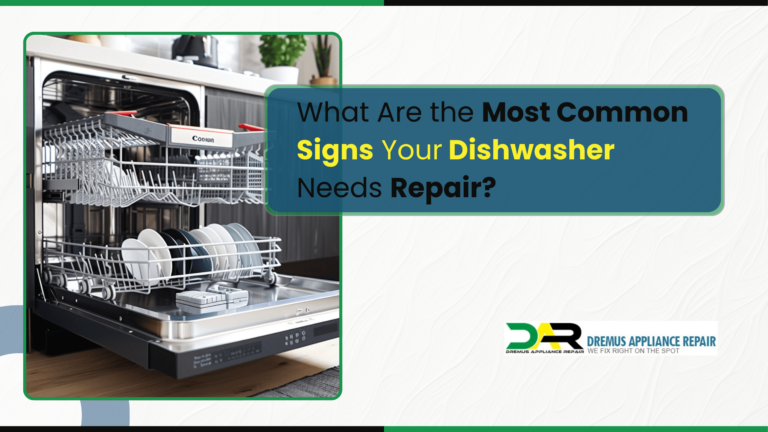
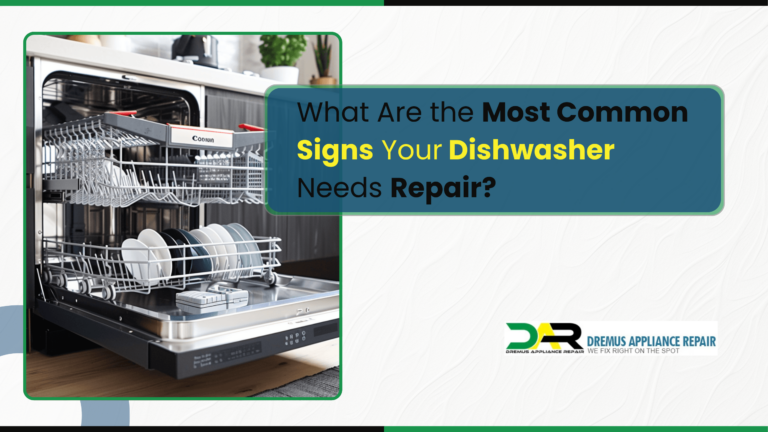
What Are the Most Common Signs Your Dishwasher Needs Repair

What Are the Most Common Signs Your Dishwasher Needs Repair?

A dishwasher is a wonderful helper in your kitchen and it saves you a lot of time every single evening. After you eat a big dinner with your family, you just load the dirty plates and push the start button. Then you can go relax in the living room while the machine does all the hard work. But it is a very sad day when this helpful machine stops working the right way. Suddenly, you have to stand at the sink to wash every single pot and pan by hand.
Many people notice early warning signs of a broken appliance, but they just ignore them. They hope the problem will magically go away on its own. Sadly, waiting too long can cost you extra money. A tiny problem can quickly turn into a massive breakdown. Let us look at the top signs that tell you it is time to call a professional.

Your Dishes Come Out Dirty

You open the machine door after a long wash cycle and you expect to see sparkling clean plates. Instead, you find hard bits of dried food stuck to your favorite bowls. This is a clear warning sign that your machine is struggling to do its main job. Please do not just run the cycle a second time. Running the machine twice wastes a lot of water and it drives up your utility bills. There are a few reasons this annoying problem might happen in your kitchen:

  • The spinning spray arms might be stuffed with hard food bits.
  • The little soap door could be jammed shut during the wash.
  • The main water pump might be getting weak and losing pressure.

Water Pools at the Bottom

A tiny bit of clean wetness left inside the plastic tub is completely normal. However, a deep pool of murky water is very bad news. If you see a large puddle at the bottom after the cycle finishes, you definitely have a serious drain problem. Standing water starts to smell like a swamp very quickly and it can breed harmful germs right where you wash your eating tools. Look out for these common drain problems that stop the dirty water from leaving:

  1. A big piece of old food is blocking the bottom trap.
  2. The plastic drain hose behind the machine has a bad bend.
  3. The electric drain pump motor is broken and needs replacing.

The Machine Makes Strange Noises

Dishwashers usually make a very soft humming sound while they work. You might also hear some warm water splashing gently against the inside walls. Those quiet sounds are perfectly fine. But loud and crazy noises mean true danger for your machine. You should never ignore a brand new noise that sounds scary. A quick check from an expert can stop a tiny broken part from turning into a total disaster. Listen very closely for these bad sounds during your next wash cycle:

  • A loud grinding sound means a motor piece is tearing apart.
  • A heavy thumping noise means something is hitting the spinning wash arm.
  • A high squeal means water is struggling hard to push through.

Bad Smells Will Not Go Away

A clean washing machine should really smell like nothing at all. If your kitchen smells like a garbage can when you open the door, you need to take note. You can try cleaning the bottom filter yourself with a paper towel. You can also run an empty wash cycle with some white vinegar to freshen things up. But if that terrible smell stays around, you need an expert to clean deep inside the hidden pipes. What usually causes this terrible stink in your kitchen?

  1. Pieces of old meat and vegetables are trapped deep in the filter.
  2. Sticky grease is stuck on the inside walls of the drain hose.
  3. Dark mold is growing in the wet folds of the rubber seal.

Water Leaks on Your Floor

Water always belongs inside the washing tub and it never belongs on your nice kitchen floor. A bad leak can completely ruin your expensive wood or tile floors in just a few minutes. It can also cause toxic mold to grow out of sight under your wooden cabinets. You must clean up the spilled water right away so nobody slips and falls. Then you should call for professional help before you ever run the machine again. Why do these sudden bad leaks happen in the first place?

  • The rubber gasket seal around the front door is torn or old.
  • The plastic water inlet valve is cracked from years of hard water.
  • The metal washing tub has a tiny hidden hole from deep rust.

The Door Does Not Latch Shut

Your washing machine is actually very smart. It will not start a wash cycle if it thinks the front door is open. The tight latch keeps all the hot water safely inside the tub where it belongs. If the door pops open on its own, the whole cycle stops completely. Sometimes, pushing the door really hard works for a few days, but it will eventually break for good. Common door latch problems include the following issues that require a fast and simple professional fix:

  1. The small plastic catch piece is finally snapped in half.
  2. The electronic safety sensor is faulty and sends the wrong signals.
  3. The metal door hinges are bent because someone leaned on the open door.

Trust Dremus Appliance Repair for Your Needs

You rely on your kitchen tools every single day to feed your loved ones. When your favorite tools stop working, your entire daily routine falls apart. That is exactly where Dremus Appliance Repair steps in to save the day. Our team knows how to spot all of these warning signs incredibly fast. We have the right tools and the best training for every major appliance brand on the market.
Our friendly workers always work hard to fix your broken machine on the very first visit. We even bring common spare parts with us to save you precious time. We treat your home with total respect and care while we work. We really do not want you to wash dirty pots by hand for a whole week. Early appliance repairs save you from spending a fortune on a brand new machine. Reach out to Dremus Appliance Repair today and let us get your busy kitchen running smoothly once again.

FAQs

  1. Why are the dishes still dirty?

The spray parts might be full of food. The soap door could also be stuck.

  1. Is water at the bottom bad?

Yes. A big puddle means dirty water cannot leave the machine.

  1. What stops the water from draining?

Old food can block the trap. The plastic drain hose might also have a bad bend.

Dremus Appliance Repair 1 768x432 1

Why Is My Oven Not Heating Properly? Common Causes and Solutions

Have you ever tried to bake a cake, only to find the oven stays cold? It is very frustrating. You mix the batter and put the pan inside, but nothing happens. Your plan is ruined. An oven that will not heat up is a big problem. You need it to cook food for your family. Do not panic. Often, the fix is simple. You can even check a few things yourself before calling for help.
At Dremus Appliance Repair, we will help you understand what is going wrong. We work on gas and electric appliances and help with many common oven problems.

Below, we’ll look at the most common reasons your oven isn’t heating properly, along with how to fix them and get your oven working again.

Common Causes of a Cold Oven and Solutions

The Bake Element Might Be Broken

If you have an electric oven, look at the bottom floor inside it. You will see a dark metal wire resting there. This wire is called the bake element.
When you turn the oven on, this wire should get very hot. It should glow a bright orange or red color.
Sometimes, the bake element gets old from being used so much to cook meals. It can burn out over time. You might see a small hole or a dark spot on it.
If you see a broken spot, the wire cannot get hot anymore. The heat cannot flow through the broken part. This means your oven will stay completely cold.
The solution is to replace the bake element. A good repair expert can take out the old wire and put a new one in quickly. Then your oven will get hot again.

A Bad Igniter in Gas Ovens

Gas ovens are very popular, but they have different parts than electric ovens. If you have a gas oven, the problem might be the igniter. It opens the valve to let the gas flow into the oven. Then, it makes a hot spark to light the gas on fire.
If your gas oven is not getting hot, the igniter might be weak. As an igniter gets older, it takes a longer time to get hot. If it does not get hot enough, the gas valve will stay closed tight. No gas means no fire.
You can hear a clicking sound if the igniter is trying to work. If it clicks but there is no heat, the igniter is probably bad. You will need a new igniter. An expert can install a new one for you.

The Temperature Sensor Is Not Working

Every oven needs to know how hot it is inside. There is a small metal part called a temperature sensor. It sits inside the oven near the top back corner. This sensor tells the oven’s computer brain how much heat is inside.
If the sensor is broken, it might send the wrong message. It might tell the oven that it is already very hot inside. Then the oven will stop making more heat and shut off. Your food will just sit in a cold box.
Sometimes, the sensor gets bumped by a big pan. Make sure it is not touching the wall. If it is broken, an expert can test it easily. If it is bad, they will put a new one in.

The Thermal Fuse Is Blown

Your oven has a smart safety part inside called a thermal fuse. It stops the oven from getting too hot and starting a fire. If the oven gets hotter than it should, the fuse will blow.
When the thermal fuse blows, the oven shuts off completely. It will not heat up at all. This happens to keep your house safe from danger. A blown fuse cannot be fixed. A brand-new fuse must be put in its place by a helper.

The Control Board Is Confused

The control board is like the main brain of your oven. It tells all the other parts what they need to do. It tells the bake element to get hot. It tells the igniter to light the fire.
Sometimes, the control board breaks down. A part on the board might burn out. If the brain is broken, the oven will not know how to heat up. Replacing a board is a big job. It is best to have a professional look at it to make sure it is done right.

Why You Should Call an Oven Repair Technician

You might think about fixing these broken parts by yourself. But ovens can be dangerous machines. They use strong electricity and natural gas. If you make a mistake, you could get hurt. You could also make the oven even worse.
It is always a smart choice to call a trained helper. They know how to handle wires and gas pipes safely. They find the real problem fast. This saves you time and worry.
If you live in Maryland, Dremus Appliance Repair is ready to help you with your broken oven. We have been fixing appliances for over ten years. We know all about ovens, refrigerators, washers and dryers. We repair major brands like LG, KitchenAid and Frigidaire.
We know your time is important. You do not want to wait days for a repair. When you call us, we try to fix your oven on the same day. We take pride in our fast work. We take great care of our clients to make sure you get the best service.
We want you to feel safe and happy with our work. That is why we give you a ninety-day warranty guaranteed for parts and labor. We want to make sure our service is affordable. If the same problem comes back, we will fix it.
Our friendly team visits many local areas. We go to Severn, Odenton, Fort Meade, Hanover, Glen Burnie, Gambrills, Crofton, Laurel, Fulton, Elkridge, Ellicott City, Jessup, Bowie, Lanham and Annapolis. We are the leading experts near your home.

Get Your Oven Working Again

A cold or weak oven can make cooking hard. But the problem may be simple.
A bad element, igniter, sensor, thermostat, fan, door, or control board can affect oven heat.
If your oven is not heating right, do not guess which part is bad. The best step is to have the oven checked by a trained repair technician.
For oven and appliance repair service, contact us to learn more about available repair services.

FAQs

Can I fix my oven by myself?

You can do simple checks, such as checking the breaker box or looking at the door seal. Do not touch any wires or gas parts. It’s safer to let a professional do the work.

Will I have to wait a long time for an oven repair?

No, you won’t have to wait long. Dremus Appliance Repair offers same-day service to get you back to cooking fast.

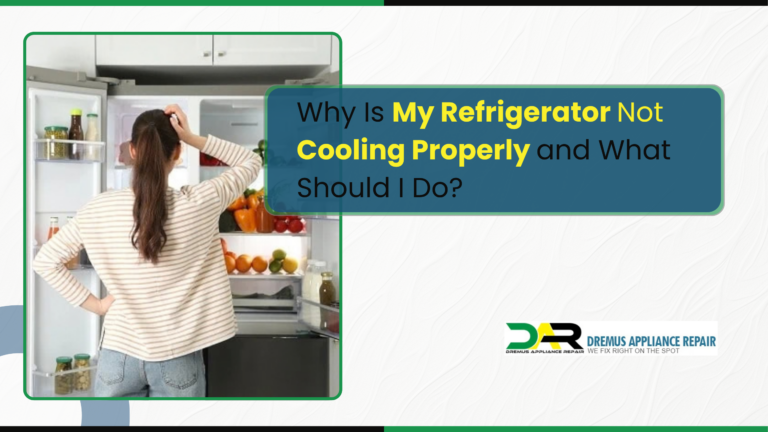
Why Is My Refrigerator Not Cooling Properly and What Should I Do 768x432 1

Why Is My Refrigerator Not Cooling Properly and What Should I Do?

You open the door for a cold drink, expecting icy relief, but a miserable wave of warm air hits your face instead. Terrible. A broken fridge is a nightmare, especially when you just bought expensive groceries (and organic milk spoils fast). You wonder why. How do you fix it quickly? Seriously, don’t stress yet, most of the time a warm refrigerator only needs a simple five-minute adjustment. Other times, sadly, you’ll need to call a professional. Let us walk through exactly why your unit is failing to cool properly and your next best logical move today.

 The Real Danger of a Warm Refrigerator

The fridge’s only real job is keeping food cold enough to remain safe to eat. Temperatures inside must always stay below forty degrees. If that air gets even slightly warmer, toxic bacteria will start to multiply extremely fast on your meals. This gross bacteria is exactly what makes people horribly sick with upset stomachs. If your fridge has been running warm for more than a few hours, you must be incredibly careful. Check milk. Check raw meats. If they’re warm to the touch, toss them immediately. Yes, it sucks to throw away food (we get how awful that feels), but don’t ever risk eating something spoiled.

 Causes of Refrigerator Cooling Issues

Why does a healthy fridge suddenly stop working? There are a few main reasons that happen all the time.

Dirty Condenser Coils

Your fridge has metal coils that usually live at the bottom or the back of the machine. These coils help push the hot air out of the fridge and into your room. Over time, they can get completely covered in thick dust and pet hair. When they get too dirty, the fridge cannot cool down and will stay warm on the inside.

Blocked Air Vents Inside the Fridge

Cold air needs plenty of empty space to move around your food. Frosty air comes from the freezer into the main fridge area through small vents. If you push a big pizza box right in front of those holes, the cold air gets stuck and cannot move around to cool your drinks.

A Broken Door Seal

Look closely at the rubber strip that goes around the edge of the fridge door. This important part is called the gasket and it keeps the cold air safely trapped inside. If this rubber gets dirty or cracked, the cold air will leak out into your kitchen all day long.

The Wrong Temperature Setting

This reason sounds very simple, but it happens a lot more often than you might think. Someone might bump the temperature dial by accident when they are reaching for a late night snack. If the dial gets turned down to a warmer setting, the fridge will stop cooling completely.

A Broken Evaporator Fan

Your fridge uses a small fan to blow the cold air across all the shelves. You can open the fridge door and listen very closely for a humming sound. If you do not hear a fan blowing the air, the fan motor might be broken and needs to be replaced.

 What Should You Do? Simple Steps to Fix It

Try these few easy fixes before you hire a professional, they just work.

  • Check the power plug. Check that the cord is firmly in the wall. When you clean the floors, a loose plug could come out by surprise.
  • Look at the thermostat. Locate that tiny internal dial, then verify it rests securely on the normal cold setting instead of creeping warm.
  • Organize your food. Hunt down the rear air vents. Drag those bulky boxes away from them immediately, because frigid air must circulate flawlessly to keep your groceries chilled.
  • Clean the door seal. Wipe the rubber strip with a damp, soapy cloth, check that there’s nothing stuck and prop the heavy door open.
  • Vacuum the fridge back. Safety matters. Unplug it first, drag the heavy machine outward and aggressively suck all that thick, choking dust off the exposed metal cooling coils.

 When to Call an Expert for Help

Occasionally those simple little tricks just don’t cut it. If you cleaned all the dusty coils and checked the vents, yet your fridge remains stubbornly warm, you must walk away right now. Do not try taking that complex motor apart. Never tamper with live wires or cooling gas under pressure, it’s risky and unwise. If the machine is shaking badly or getting excessively hot, contact a professional at once.

 Trust Dremus Appliance Repair for Fast Service

If your refrigerator is still not cooling, Dremus Appliance Repair is ready to help you today. We know that you cannot wait around while your expensive food spoils in the kitchen. That is exactly why we respond so quickly when you call us. We repair all major appliance brands, including LG, KitchenAid, Frigidaire, GE, Samsung, Whirlpool, Bosch and Sub-Zero.

Why should you choose our team?

  • Fast, Same-Day Service: We value your time, so we always want to get the job done on the exact same day you call us.
  • Great Experience: Our professionals know how to find the problem and fix it fast and we also repair ovens, dishwashers, stoves, washers, dryers and AC units.
  • Peace of Mind: We make sure that our repair services are highly affordable and done right the very first time.

We proudly serve many local areas in Maryland. If you live in Howard, Anne Arundel, PG County, or Montgomery County, we are close by. We visit towns like Severn, Odenton, Glen Burnie, Columbia, Annapolis, Bowie, Laurel and Fort Meade. Call Dremus Appliance Repair right now and we will make your refrigerator cold again!

FAQs

Can dust stop a fridge from working?

Yes. Dust covers the metal coils in the back. Clean the dust off so the fridge can cool down.

Why do blocked vents make the fridge warm?

Cold air comes out of small holes. Big boxes block the air. Keep empty space around food.

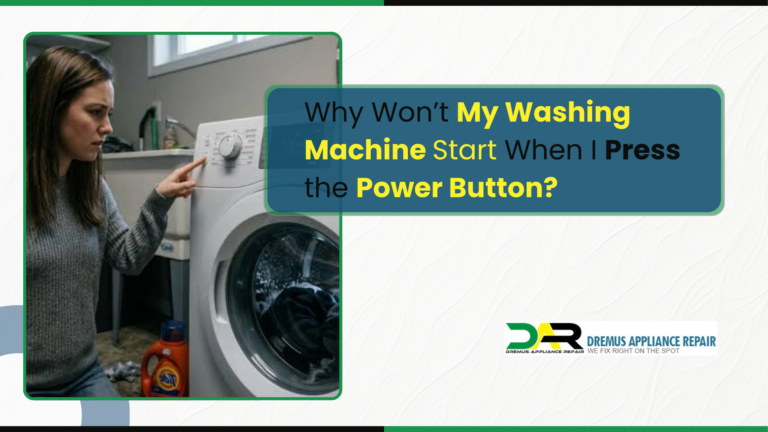
Why Wont My Washing Machine Start When I Press the Power Button 768x432 1

Why Won’t My Washing Machine Start When I Press the Power Button?

You press power hoping for rushing water, but the massive machine sits dead. The display is completely lifeless. A stubborn washing machine refuses commands, instantly destroying your weekly schedule (since laundry mountains grow alarmingly fast). Fortunately, that quiet appliance does not mean you need to buy a brand new replacement. Sometimes, the simple fix takes barely five minutes, requiring absolutely no special tools. Other times? The problem demands looking deeper into internal mechanical parts. Let us carefully explore exactly why your washer ignores physical touch and get your daily laundry routine back on track today.
If your washing machine won’t start when you press the power button, the most common culprits are a disconnected power cord, a tripped circuit breaker, an active child lock, a faulty safety door latch, or a blown internal component like the thermal fuse or control board.

 Verify the Main Power Source

Electricity acts as the literal heartbeat of your entire laundry room because every single appliance requires massive, steady power to successfully wash heavy clothes. Dead washer? Don’t panic (or instantly assume the motor died). Power supply issues consistently remain the leading culprit behind unresponsive machines. Look behind it. Those intense vibrations from violently spinning wet clothes can eventually rattle a plug totally loose over several months. Push it back in hard. Ensure your machine connection is perfectly tight.
Test your current power supply safely by following these specific steps:

  • Unplug the heavy cord from the wall outlet completely to thoroughly avoid safety risks.
  • Find a small desk lamp that operates perfectly well.
  • Plug that working device into the exact same washing machine wall plug.
  • Turn the small device on to see whether it receives electrical power.

If the lamp remains totally dark, your house circuit breaker has tripped.

 Examine the Safety Door Latch

Floods ruin houses. That is precisely why modern washing machines flatly refuse to activate if sensors sense an open door. This core safety feature stops sudsy water from soaking your flooring by requiring a secure seal before any valves open. Front-loaders use heavy hooks sliding into hidden switches, a smart tactic, whereas top-loaders rely on tiny lid switches (often near the top rim). Should this part break or get blocked by gunk, everything halts. Inspect these crucial door pieces carefully before you call a costly technician:

  • Wipe down the latch area with a wet rag to remove sticky, built-up soap scum.
  • Listen closely for a sharp, distinct clicking noise when you shut the appliance door firmly.
  • Look carefully for any bent plastic pieces or cracked metal sections on the door hook.

Without hearing that click, the safety switch is probably toast. It absolutely requires a professional replacement to get your normal laundry routine functioning safely once again without any messy leaks.

 Check for Active Child Lock Settings

Modern laundry panels control absolutely everything now. We appreciate the clever child lock feature since it successfully stops sneaky toddlers from starting scalding wash cycles. Ironically, this same safety trick confuses adults (usually busy parents) who forget to turn it off. Blocked. While still active, the security protocol blatantly ignores your physical touch on main buttons and cycle dials. Just check the digital display closely. You will likely spot a padlock icon or see the letters CL aggressively flashing back at you. You usually have to press a specific button set for three full seconds to turn off this hidden digital lock for good each time.

 Inspect the Internal Control Board

The internal computer board acts as the central brain of your washing machine. Every time you press the power button, an electrical signal travels directly to this board to start the water valves. If trapped moisture or a sudden house power surge damages this sensitive board, the machine will act completely dead. Sometimes the actual plastic button you press gets stuck directly behind the front panel. Try pressing the power button firmly and feeling for a normal physical spring click to make sure it moves properly. If the button feels mushy, the mechanical spring behind it has totally failed.

 Understand the Thermal Fuse Protection

Heat builds up quickly. Washing machines work hard to spin heavy and soaking-wet bath towels. This tough task increases the motor heat during long cycles. It happens. However, to stop deadly electrical fires in homes, smart manufacturers hide a tiny safeguard inside: the thermal fuse. This sensor serves as a vigilant observer, regularly looking for temperature spikes. If things reach a terrifying danger zone, boom! The fuse violently sacrifices itself. It blows out. Power vanishes instantly. Once it dies to shield your home, the washer stays completely dead until you physically install a brand-new replacement part.

 Trust Dremus Appliance Repair for Fast Solutions

Dealing with a broken washing machine creates unnecessary stress for your household when you just want clean clothes. When simple checks fail to solve the issue, you need an experienced professional to handle the mechanical repairs safely. Attempting to take apart a major appliance entirely by yourself can lead to worse internal damage or dangerous electrical shocks. Dremus Appliance Repair provides excellent appliance repair services across Maryland to keep your home running smoothly. With over ten years of industry experience, these skilled professionals know exactly how to fix completely dead washing machines. They confidently work on LG, Samsung, GE, Whirlpool, KitchenAid, Frigidaire and many more major brands.
Dremus Appliance Repair values your time by responding quickly and completing the repair job on the same day. Whether you live in Severn, Columbia, Annapolis, Glen Burnie, Odenton, or anywhere across Howard, Anne Arundel, PG County and Montgomery County, you can count on reliable appliance service. Contact Dremus Appliance Repair right now to restore your peace of mind and get your laundry room functioning perfectly once again.

FAQs

Why does a washing machine look totally dead?

The plug might just be loose. Shaking from spinning wet clothes can push the plug right out of the wall. Push it back in tight.

Who can fix a broken washing machine fast?

Call an expert like Dremus Appliance Repair. They fix major brands on the exact same day. Taking a washer apart alone can cause a bad electric shock.